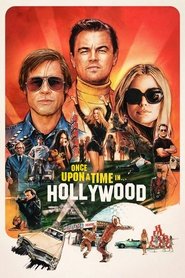
The sort of film that you bathe in and absorb, as opposed to a film you observe from a distance.
It’s all good vibes and hangouts until it’s suddenly not. Gorgeous and confident, with the visual tapestry of late Hitchcock and the stable gaze of Fincher (who, having revisited this, is going to do a great job picking up the torch with the Cliff Booth movie).
With Inglorious, Tarantino gave audiences the catharsis of killing Hitler. With Django, he gave them the catharsis of slaves defeating their American masters and riding into the sunset. With Hollywood, Tarantino breaks the pattern. The violence isn’t a constant threat throughout the film, waiting to explode. It comes as a shock in the climax, as though it were out of nowhere. If you didn’t know Shannon Tate’s story, you’d be forgiven for your confusion.
But there still is some catharsis at play, once again in the form of American fantasy: a good guy with a flamethrower stops a bad guy with a gun. The sort of ending made possible only on celluloid; reality, as we know, played out very differently that night.
Despite loving almost every minute of this, I don’t think it works as well as Inglorious or Django. The fantasy is a little confused: should we be glad that the Hollywood oligarchy defeats the hippies? That the rich claim victory over the poor? And why is getting into a club with Roman Polanski, of all people, so desirable?
On one hand, none of that is the message Tarantino is going for, but it’s the cultural subtext of the original crime, and the cultural subtext of the modern era the film was released in, so it merits some interrogation.
But also, why Sharon Tate? On one level, Tarantino is clearly obsessed with Hollywood, and he thinks Tate’s murder was the tipping point when the magic was destroyed. But in reality, that tipping point was the assassination of JFK six years prior. That was the reckoning moment for post-WWII America, when it became clear that not all was well at home.
So if you’re going to make a movie examining this loss of innocence in the ’60s, why not offer the catharsis of preventing the JFK assassination instead? I have wondered this for years.
Watched as I’m sure Tarantino intended, on Prime, with ads, on an iPad, while holding a baby.